Value

I pay a fair share for the energy I use

Explore Value:

Objectives

The evidence is clear that using electricity to power efficient appliances and vehicles is the least cost way to operate our homes and businesses now and in the future. So why is the gas network still expanding in some parts of the country, locking more of us into expensive upgrades down the track? It’s time for consumers to be told that the future is electric and for governments to put policies in place to prevent us making bad financial investments in fossil-fuelled homes, home appliances and cars that will have to be fixed or prematurely replaced later.

Network costs make up roughly 50% of the average household energy bill, and they are rising significantly. More of us are going all-electric and if the sector simply builds more networks, instead of using the ones we have more efficiently, the benefits of low-cost renewable energy will be more than offset by these costs. We’re funding research into how network utilisation can be more effectively measured and working with industry and regulators to make sure that consumers are getting their money’s worth for the networks they pay for.

Unlike taxes, which are progressive (i.e. the more you earn, the higher the rate of tax you pay), energy bills don’t take into account your income or personal circumstances, which is why it’s so hard for low-income families, and small businesses that need to use more energy, to afford them. In the middle of a cost-of-living crisis, we need to make sure that only energy costs are added to our energy bills – not costs for other policy priorities. Regional development is good for Australia, but it should be paid for via taxes.

We are tired of hearing that it’s up to consumers to engage more with the retail market and educate themselves on energy pricing. This puts all the work on us, when it’s the system that’s at fault. Default market offers, which were put in place to protect us from unreasonably high prices, aren’t working well and many of us are, in effect, being charged a loyalty tax by retailers because we can’t easily switch. Further, consumer needs have evolved, with more of us adopting consumer energy resources and changing the way we use energy, but retailers haven’t kept up. We need more diverse and innovative retail products that meet the needs of everyone and better protections from poor retailer behaviour. 

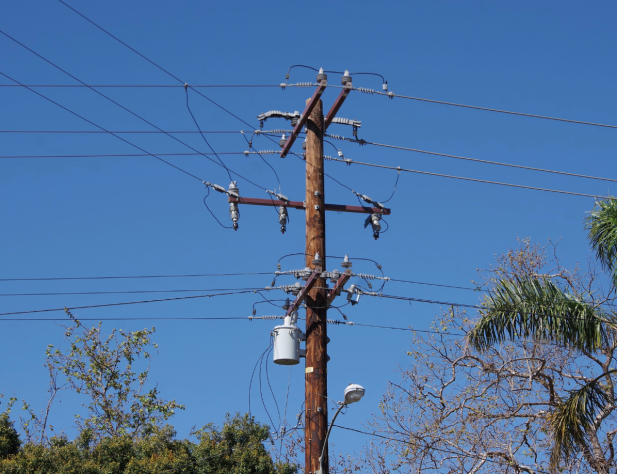
You’d assume that higher bills would mostly be driven by higher energy prices – except we’re seeing decreases in wholesale electricity prices, largely driven by cheaper renewable energy in the system. A lot of the increase is actually due to network costs – the poles, pipes and wires. If these costs keep increasing, the benefits of cheaper renewables could well be lost. We need to encourage regulators to use – and, if necessary, expand – their monitoring powers to ensure that we all pay a fair share for energy, and not a cent more.

Koala illustration
Showing 1 - 9 of 112 results
Illustration of young girl reading book outside house
Grants Archive
26 May 2026
Tariff-Tracking, energy price and market analysis post price resets in July 2026, 2027 and 2028
To continue but also expand the Vinnies’ Tariff-Tracking Project to ensure that it produces data and analysis that are fit for purpose at this crucial time of the energy transition.
Photo of a rooftop with solar panels on it; in the background is a grey cloudy sky and a gum tree
News
26 May 2026
3 min read
Energy Consumers Australia response to Default Market Offer 2026-27 and Solar Sharer Offer
Media release: We welcome the AER’s final decision on this year’s Default Market Offer, which will help provide much-needed bill relief for consumers and small business on standing offers at a time when concerns about energy costs are justifiably high.
Powerlines outside Melbourne
News
23 April 2026
2 min read
Energy Consumers Australia statement on the AEMC's Enhancing Distribution Network Planning and Reporting Draft Determination
Media release: Energy Consumers Australia welcomes the AEMC's draft determination on consumer-focused network planning.
Photo of a woman reading an energy bill, sitting in a wheelchair, next to a window
Submission
10 April 2026
2 min read
Submission to the Australian Energy Regulator (AER) on the Default Market Offer 2026-27 Draft Determination
We welcome the AER's draft determination on the Default Market Offer (DMO) 2026-27, which proposes to lower default prices by 1 to 10% for households and 7 to 21% for small businesses.
Photo of a person at a desk in part sunlight, wearing glasses and holding paper in their left hand, and tapping a calculator in their right. They are looking at the paper.
News
19 March 2026
3 min read
Energy Consumers Australia statement on the DMO draft determination and Solar Sharer Offer
Media release: We welcome the Australian Energy Regulator (AER)'s draft decision on this year’s Default Market Offer. If adopted, default prices for households will drop 1 to 10% and small businesses on the DMO will save 7 to 21%.
Close-up photo of a gas heater in a dark room
Research
12 March 2026
5 min read
Managing the transition from gas for South Australians - new modelling
Illustration of young girl reading book outside house
Grants Archive
26 February 2026
Tariff-Tracking, energy price and market analysis post price resets in July 2023, 2024 and 2025
The project produces analysis of changes to energy prices. It informs regulators, policy-makers and consumer advocates about price changes, trends and issues arising in the NEM retail markets to inform regulatory and policy processes. The project ensures that residential consumers are knowledgeable about changes to energy prices and market developments.
Close-up photo of hands wearing red and black gloves, checking pipes
Submission
20 February 2026
2 min read
Submission to the Australian Energy Regulator (AER) on Australian Gas Networks (SA) and Evoenergy (ACT) draft decision and revised access arrangement proposals
Our submission to the Australian Energy Regulator (AER) outlines our position on the AER’s draft decisions regarding Australian Gas Networks and Evoenergy's proposals.
Photo of a kookaburra sitting on an electrical wire
Submission
19 February 2026
2 min read
Submission to the AEMC on the Integrated System Plan (ISP) Framework Review Consultation Paper
We make several practical recommendations to the Australian Energy Market Commission (AEMC) to improve the Integrated System Plan and strengthen its focus on consumers.

Subscribe to our newsletter

Join our community to access analysis on energy events, be the first to see our latest market research, receive invitations to stakeholder events, and help advance consumer needs.