
Consumer Energy Report Card: Understanding household barriers to residential solar and battery uptake and the potential for growth

Australia’s energy transition is reshaping how households source and use electricity.
Rooftop solar is now on one in three homes. The Federal Government’s Cheaper Home Batteries Program, launched in July 2025, has accelerated household battery uptake. However, access to these technologies is not evenly distributed across households.
Understanding who can adopt these technologies – and who cannot – is critical for equitable policy and market design. Our report (PDF, 267.68KB) applies a well-established behavioural framework to unpack how consumer capability, opportunity and motivation are influencing solar and battery adoption.
Key findings
- At least half of Australian households face structural barriers to adopting solar and batteries
- Structural barriers include living in a rental property, living in an apartment or having an annual household income of less than $50,000
- Renters account for the largest share of households facing these barriers
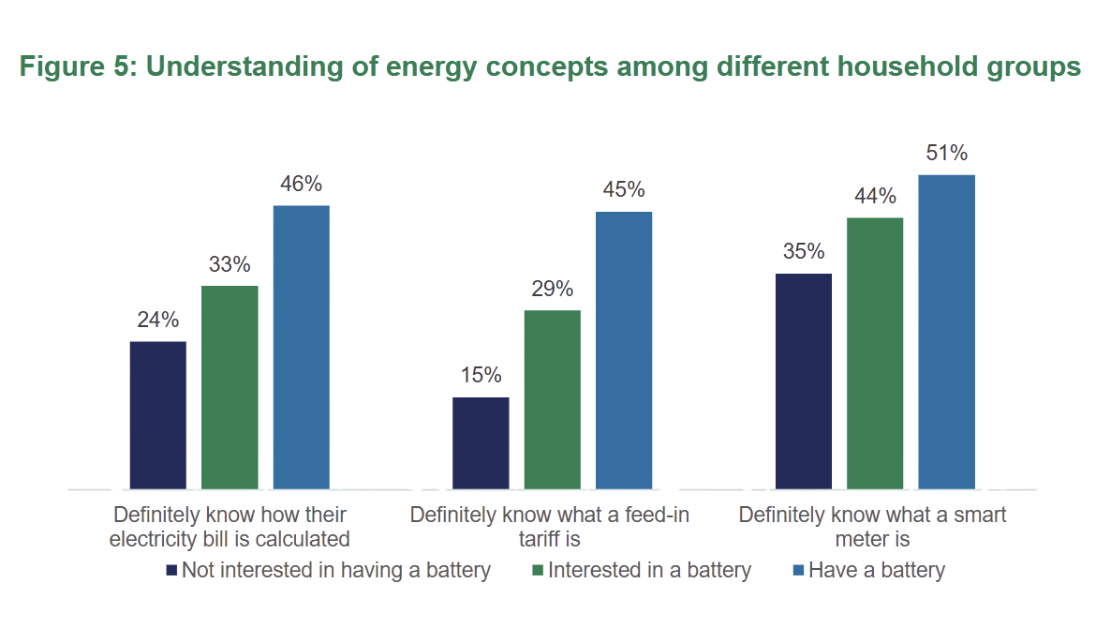
- Households that understand the transition to renewable energy are more likely to adopt batteries
- Capacity and motivation are also key, and often ignored, drivers of solar and battery adoption
Home ownership and dwelling type remain key factors in solar and battery adoption
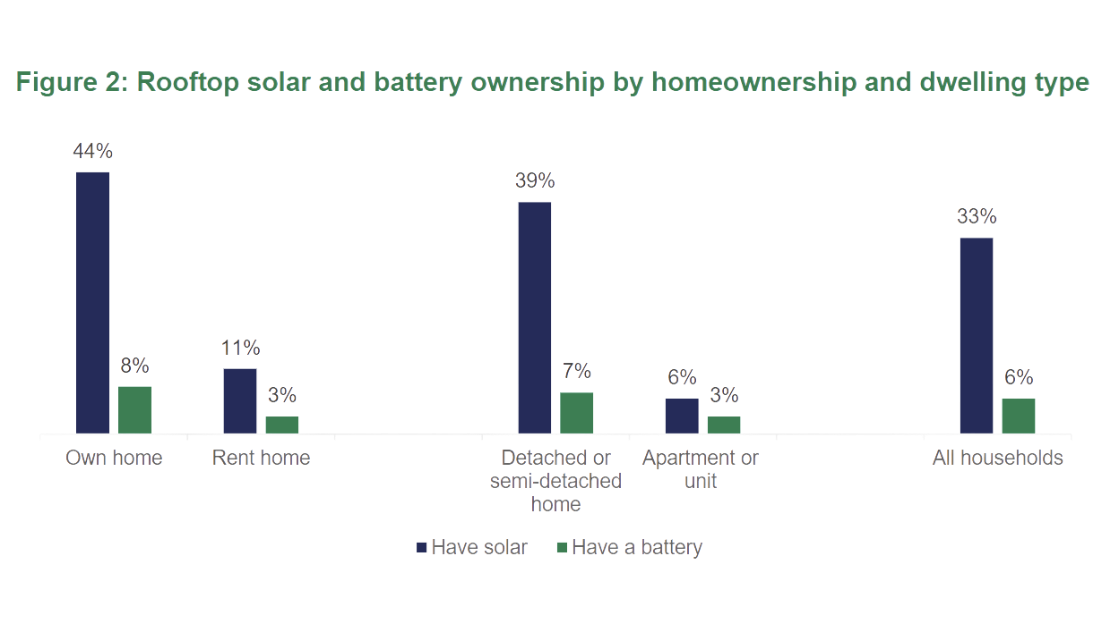
Home ownership and dwelling type are key factors in whether a household can install rooftop solar. Our analysis shows solar and battery ownership vary sharply by home ownership and dwelling type.
For renters, the main barrier is the split incentive problem, where landlords face the upfront costs of installation, while tenants receive most of the benefits.
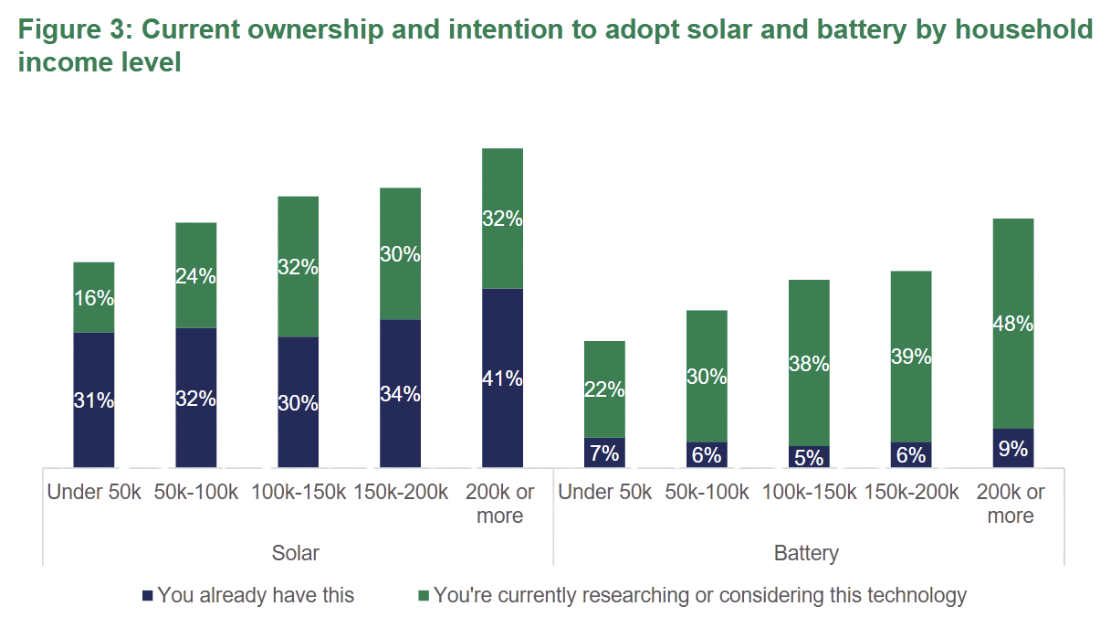
Higher income households are more likely to say they are interested in solar and batteries
Households with higher incomes are more likely to be interested in solar and/or battery adoption. Only 43% of households in the $200,000 plus income group neither own, nor are considering battery, compared with 71% of households in the under $50,000 income group.
Affording upfront capital costs is shaped by more than income alone. Factors such as household wealth, savings, ongoing expenses and access to capital also influence financial capacity.
Capability and motivation are also key, and often ignored, drivers of solar and battery adoption
Even among households with few structural barriers — such as homeowners in standalone dwellings –
around half still do not have solar. This suggests other factors, such as capability and motivation, also
play an important role.
Our report investigates these factors and identifies the following influences on consumer interest in solar and battery adoption.
Factors influencing motivation to adopt solar/batteries
- Financial returns
- Energy needs
- Interest in having an active relationship with the energy system
Factors influencing capability to adopt solar/batteries
- Higher level of energy knowledge
- Understanding the transition to renewable energy
Watch the video
Download the report
Access insights and data about household barriers to residential solar and battery uptake via the link below.