Consumers want hot coffee in the morning, a cool room in the middle of a warm day, and lights to read, cook and work at night. Precisely how they get these ‘energy services’ – whether through electricity generated at a faraway power station, from a local rooftop solar system or by a combination of both – is not on most people’s minds.
But it’s also important consumers get these ‘energy services’ at the most efficient cost possible.
Energy bills are already causing financial stress for many households and small businesses, and energy prices are a key contributor to inflation.
So, when Australia plans its future energy system, consumers need confidence that decision-makers are considering all options. As our nation’s energy needs grow, it becomes even more important that we know, then implement, the most cost-effective ways to get the energy we need.
Balancing the supply/demand equation
Currently, Australia’s default electricity planning approach – the Integrated System Plan – is designed to determine how much additional large-scale generation (solar, wind, gas) is needed, and what additional networks are required to bring it to consumers. These large-scale power stations require local planning approval and investor confidence, and place an increasing burden on regional communities.
Australia will continue to need large-scale investment in our energy system. But supply-side infrastructure is only one side of the equation.
To meet our need for comfortable homes, what if we made energy-efficient air conditioners significantly cheaper, so that consumers purchased these instead of ones that use more energy? Those energy savings could reduce or avoid the need for some large-scale power stations and transmission networks.
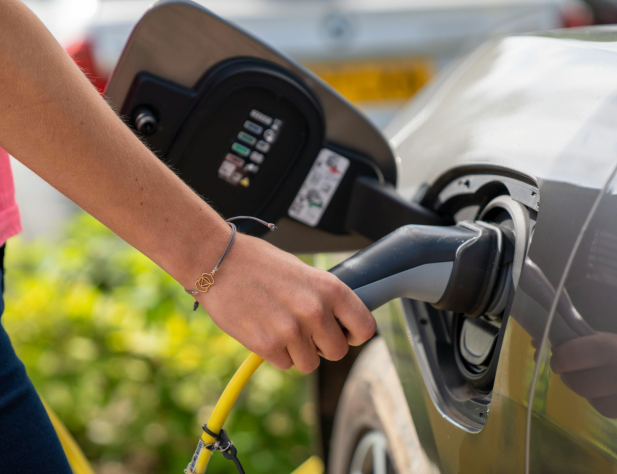
What if, to balance the variability of wind energy at night, we relied on programs that incentivised electric vehicles to charge when the wind was blowing and turned them off when it wasn’t? We can imagine a program that charges our cars flexibly, while making sure they are ready in the morning, regardless.
Being more efficient and flexible with the ways we stay comfortable in our homes, heat our water and, increasingly, fuel our cars – sometimes known as ‘demand-side resources’ – are already part of the way we meet our energy needs. But when we plan to meet our energy needs in the future, it’s critical that we consider using energy more sensibly, along with supplying more energy from large-scale power stations, to see which one is least cost.
Efficient appliances and flexible consumer energy resources need to be more than assumptions used in our plans – as they are today. We must examine if, and when, we can meet our need for energy services more efficiently, or more flexibly, and determine if such approaches create a more affordable system.
Is smaller cheaper?
Consumer energy resources leverage infrastructure that already exists, can be deployed one household at a time until needs are met, require fewer approvals and can respond to local needs. They also avoid the loss of electricity as it travels over hundreds of kilometres of transmission and distribution lines.
In Australia, we have never quantified how much it costs to get assets like home batteries and EV chargers into people’s homes and small businesses, and activate them at the right times. Without knowing that information, we cannot truly say whether it is more cost-effective to invest in more large-scale batteries or batteries in people’s homes, or what combination of both results in the least cost energy system.
We already know what it costs to generate electricity in different ways. Australia has robust, publicly available data for new generation through the annual GenCost study, conducted by CSIRO. GenCost allows us to compare how much it costs to build large-scale wind with coal, gas, solar and more.
Costing the demand-side is a materially different exercise to the supply-side and calls on us to develop a new conceptual framework that complements GenCost.
FlexCost: A new framework to understand the cost of efficiency and flexibility
To better understand how to make Australia’s electricity system reliable, secure, and flexible in the most cost-efficient way possible, Energy Consumers Australia is proud to have initiated and supported the development of FlexCost, in partnership with CSIRO.
FlexCost is a new framework that determines the cost of different measures to shift or reduce electricity demand, rather than supply. Stage One of FlexCost sets out the methodology for how much it costs to deliver a unit of energy efficiency or flexible demand.
The FlexCost methodology differentiates between the cost to purchase, install and operate the technology and the cost to incentivise consumers to purchase or use their asset in specific ways. The demand side is additionally complicated because in many cases consumers may already have the appliance. FlexCost uses the concept of ‘additionality’ to identify the additional expenditure required to incentivise efficiency or demand flexibility.
Stage Two will apply the methodology. This allows decision-makers to compare the cost of meeting consumers’ energy needs between technologies that are not alike, just as GenCost does. This means demand-side resources can be compared against large-scale generation costs.
An opportunity to improve the way we plan
FlexCost can also help improve the Integrated System Plan, Australia’s long-term roadmap for the electricity system. FlexCost can help make that planning more complete by giving decision-makers a stronger evidence base for demand-side options.
This is not about picking winners and losers. It is about exploring all of our options, to support making better comparisons and decisions.
A lower-cost energy system will not happen by accident. It will require planning that properly considers both sides of the equation: how electricity is generated, and how electricity is used.
This will help make sure consumers are not paying more than necessary for their coffees, cool air and lights when lower-cost options are available.
This article was originally published in RenewEconomy.
FlexCost has been developed in partnership with CSIRO. Find out more about the research.
FAQs
Demand‑side resources are technologies and measures that help manage how electricity is drawn from the grid, and when it is used, stored or exported.
They include options that:
- reduce electricity use through improved efficiency,
- shift electricity use to times when the system is less constrained or electricity is more abundant, or
- generate electricity locally.
Examples include:
- Smart electric vehicle (EV) charging
- Home batteries
- Energy-efficient heating and cooling
- Insulation
- Smart control of appliances
The term demand-side resources largely overlaps with consumer energy resources (CER). However, it has a broader scope, encompassing improvements in end-use energy efficiency and applications across both households and businesses.
Energy Consumers Australia commissioned CSIRO to develop the FlexCost method in order to value the efficient and flexible energy resources in consumers’ homes and businesses.
For more information, visit the CSIRO website
GenCost estimates the costs of electricity generation, storage and hydrogen production technologies. FlexCost complements this by estimating the indicative costs of demand‑side resources, including technologies and measures that shift, reduce or better manage electricity use.
Together, GenCost and FlexCost provide a more complete picture of the costs of different ways to meet Australia’s electricity needs.
FlexCost Stage 1 (the FlexCost Method Report) focuses on residential and small business technologies, including:
- Home batteries
- Electric vehicles with smart charging and vehicle‑to‑home or vehicle‑to‑grid capability
- Storage water heaters
- Heating and cooling upgrades
- Appliance efficiency
- Insulation and building efficiency improvements
CSIRO is planning to expand the scope of FlexCost to include larger commercial and industrial sectors in its future work.
Article by

Share this news