
Electrification is often considered a technical task: swap out a gas appliance, put in an electric one, and the job is done. But for small businesses, the reality can be very different. Every decision involves risk, cost, disruption to operations, all while keeping customers and staff happy.
To better understand the opportunities and challenges small businesses face, we spoke with five businesses across distilling, early learning, hospitality and advisory services operating in shared commercial spaces.
Key themes emerging from small business interviews
Across five small businesses from different sectors, including distilling, early learning, hospitality and advisory services, consistent themes emerged.
1. For these small businesses, motivation wasn’t the only barrier to electrification
Some businesses were keen to reduce emissions or lower bills, but couldn’t act. Others were open to electrification, but weren't yet convinced it will work for their operations.
- Whipper Snapper Distillery in Perth wasn’t opposed to the idea of electrification, but had already invested heavily in gas-based distilling equipment that was working well. Replacing it felt unnecessary and risky.
- Champi Restaurant in Canberra is transitioning to an all-electric premises as a result of the developer’s decision after the lease was signed. The business adapted its plans in response, with limited ability to influence the original decision.
- Treats Café (pictured below) in regional Victoria, faces high energy costs and a significant heating load, but can't justify new capital investment, given the uncertain future of the business.
These examples show that when it comes to electrification, there’s more at play than simply whether small businesses are motivated to do so. Real-world decisions hinge on a range of factors, including risk, financial resources, equipment lifecycles, staff capability, and/or whether electric alternatives are fit for purpose.
When it comes to electrification, there’s more at play than simply whether small businesses are motivated to do so.
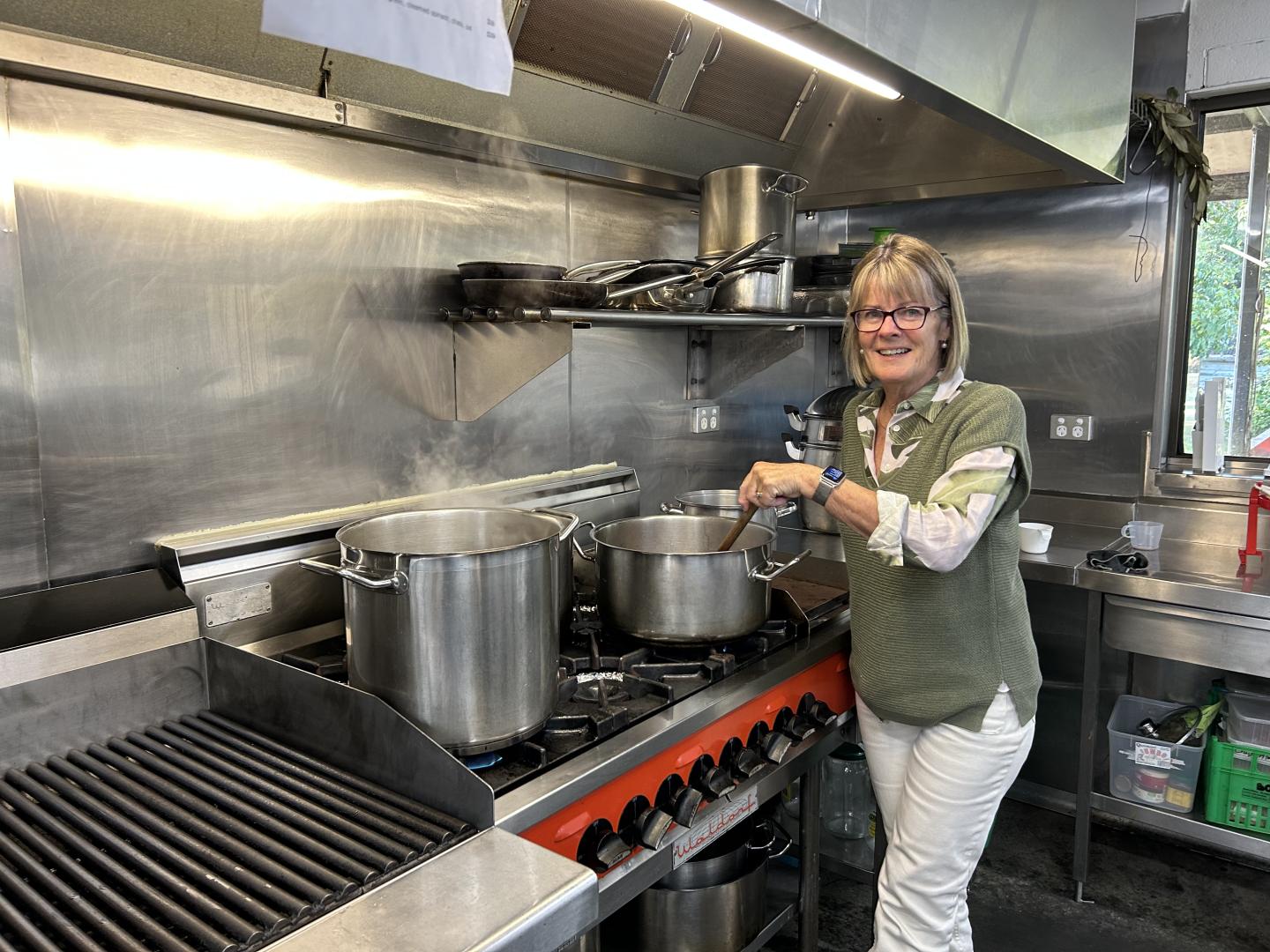
Treats is a cafe-turned-restaurant in Tawonga South, northeast Victoria, and was involved in our small business interviews informing attitudes towards electrification.
2. Structural barriers were constraining choice
Small businesses don’t always control the buildings they operate in, which means they also don’t control their energy systems.
- The Melbourne advisory firm, which uses a co-working space, has a restricted ability to influence whether the building uses gas or electricity. Its only pathway to going all-electric would be to relocate entirely.
- Many retailers and hospitality businesses operate within embedded networks that reduce their ability to influence energy decisions. In embedded networks, building owners or operators supply energy to tenants, and customers often cannot choose an alternative retailer or directly control the energy system affecting their site.
When policy assumes electrification is a decision made by individual businesses, it overlooks these types of structural barriers.
Planning rules, building standards and commercial tenancy arrangements aren’t yet aligned in a way that enables building-level electrification. This requires shifting electrification decisions to landlords, developers and building owners, with clear incentives and obligations to upgrade shared systems, instead of leaving small businesses to manage the consequences.
3. Information was difficult for these small businesses to access, trust and use
Across the small businesses we interviewed, several owners lacked a clear picture of what electrification would cost, which equipment options were available at a commercial scale, whether electric alternatives would meet their performance needs, what government support might apply to them, or how their energy bills would change once electrified.
- Mowbray Place Early Learning Centre in Sydney only engaged with solar because of repeated sales calls, not because the system was easy to understand or navigate.
- Champi Restaurant struggled to find any commercial-scale electric wok equipment in Canberra showrooms. Instead, the restaurant relied upon videos and interstate builders.
- Whipper Snapper (pictured below), didn't know the comparative safety benefits of induction or electric distilling equipment – and without that information, the status quo felt safer.
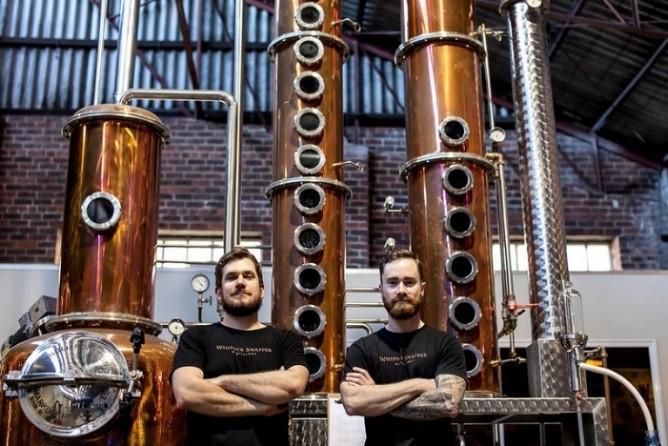
Whipper Snapper is a distillery in Western Australia which, although unopposed to the idea of electrification, had already invested heavily in gas-based distilling equipment that was working well.
For these small businesses, the underlying issue isn’t simply a lack of information. It’s that support is scattered across agencies, programs and commercial providers, leaving them to rely on unsolicited pitches or ad hoc searches. What’s needed is trusted, sector-specific guidance, delivered through channels that they actually use.
4. Financial risk sat squarely with the business owner
Electrification requires capital, and for many small businesses, even modest investments can be out of reach, not because of a lack of willingness to act, but because cash-flow constraints and uncertainty about returns make the investment difficult to justify.
- Treats Café had recently absorbed the closure of the adjacent ski lodge. The owner was clear: even if an electric boiler made sense in theory, there was simply no financial room to consider it.
- Champi Restaurant expects its electricity bills to increase significantly in its new electric-only premises, bringing total electricity use close to the 100 MWh threshold for small electricity customers in the ACT.
These small businesses told us they were willing to adapt, but not at the expense of their financial stability. Small businesses employ millions of Australians, often run on tight margins, and cannot absorb higher bills or large upfront investments without consequences. Expecting them to do so is not equitable. Small businesses need targeted support that reduces financial risk and ensures they aren’t worse off for electrifying.
What needs to change
Recommendations for governments and market bodies
These stories reflect common barriers faced by more than 2.7 million small businesses in Australia.
To deliver an energy transition for small businesses that is affordable, practical and achievable, there are clear opportunities for governments and market bodies:
These case studies show energy choices are rarely made in isolation. Instead, they're embedded within broader business decisions that already involve cost, disruption, and risk. Across these small businesses, electrification was considered at specific decision points, such as when equipment needed replacing, premises were refurbished or relocated, or when businesses were prompted by external approaches such as unsolicited sales.
At these moments, electrification enters the equation not because businesses are proactively planning an energy transition, but because a decision is already being forced. Policy and market settings should work with these moments, not against them, otherwise small businesses are likely to default to familiar options or defer change altogether.
- Align incentives, guidance and approvals with real business triggers, such as equipment reaching end-of-life, refurbishments, lease renewals or relocation. For example, by linking grants, approvals and tailored advice to these events, rather than requiring businesses to apply proactively outside normal planning cycles.
- Avoid placing responsibility on small businesses when key decisions are outside their control, by working across the commercial property and supply chain ecosystem so electrification is built into how premises are designed, leased and fitted out, rather than left to small businesses to retrofit later.
- Intervene earlier in commercial sales and installation pathways, ensuring that information provided through sales and installation channels makes electric options, as well as the long-term costs and inefficiencies of gas appliances, visible at the point decisions are being made. This could include standardised product information or disclosure requirements applied consistently across fuel types.
For many small businesses, their ability to electrify relies upon decisions by the building owners.
- Governments should update planning rules and building standards to remove barriers and create clearer pathways for all-electric new commercial buildings and upgrades to existing stock.
- Introduce incentives and obligations that encourage landlords and developers to electrify shared systems, such as space and water heating, rather than leaving it up to their tenants.
- Support electrification at the building level in embedded networks and multi-tenancy buildings, including shared upgrades to space and water heating systems, so individual small businesses aren’t required to act alone.
Businesses need specific guidance they can trust and act on. This can be provided through:
- A one-stop-shop for small businesses that brings together clear, sector-specific advice on electrification options, costs, performance, timelines and available support.
- Tailored guidance to different businesses, recognising their distinct operational needs.
- Delivering information through channels small businesses already use (such as associations, local councils, professional advisers and existing suppliers) and reducing reliance on unsolicited marketing as a primary source of advice.
Electrification will stall if it exposes small businesses to higher costs or greater uncertainty. To address this, governments can:
- Provide grants and rebates that meaningfully offset upfront costs for commercial electrification, including shared infrastructure upgrades, such as switchboards and wiring.
- Review small-customer protections and thresholds to ensure small businesses aren’t penalised or pushed into less favourable arrangements arising from electrification.
The question is not whether small businesses care about the energy transition, but whether the system makes it possible for them to act.
The Council of Small Business Organisations Australia (COSBOA) reports that almost half of small businesses (49%) have not yet taken any steps towards the energy transition, while nearly two-thirds (63%) say the cost of transition is difficult to manage.
With information often fragmented or unclear, current settings place too much risk and complexity on individual businesses, limiting action even where there is clear interest. Better alignment between government programs, planning rules, retail protections and energy market settings can help equip small businesses to electrify and build confidence in the energy transition in the process.
Explore the case studies in more detail
You can download our 5 small business electrification case studies (PDF, 3.14MB) developed by ACIL Allen, which provide insight into costs, decision-making constraints and transition pathways across different sectors.
If you’re interested in discussing these findings or how they could inform policy and program design, please get in touch with us.